
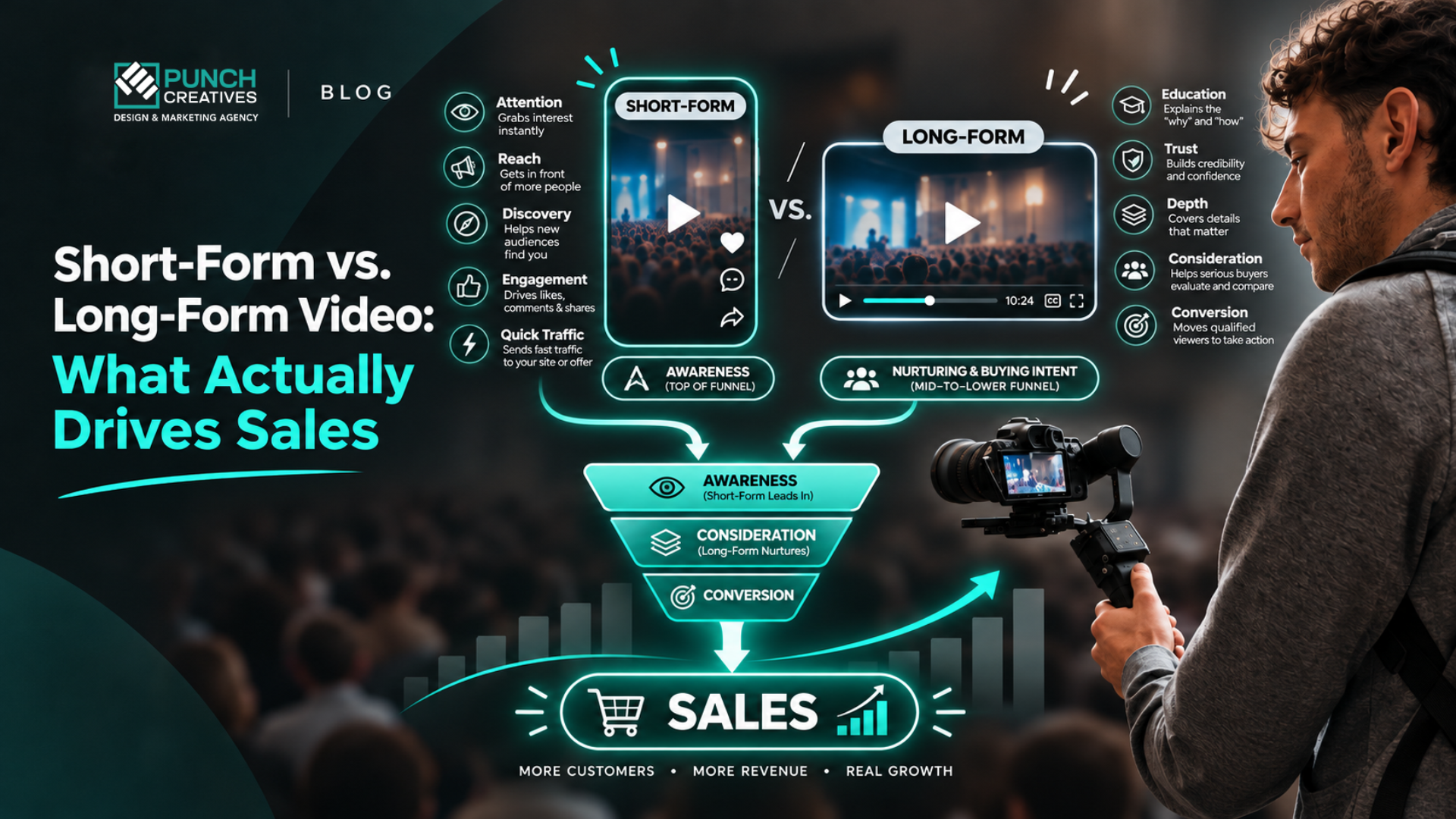
- Short-form video reaches new audiences; long-form video converts warm ones.
- A 15-second Reel is a hook, not a sales pitch — give it one job.
- Long-form video earns trust by answering the questions buyers actually ask.
- Repurpose one shoot into both formats instead of filming twice.
- Track views on short-form, but track leads and sales on long-form.
I run video shoots almost every week for businesses across the South Coast, and the question I hear more than any other is simple: should we be making short Reels or longer videos? The assumption is that one format is winning and the other is dying. That's not what I see on set, and it's not what I see in the results afterward.
Short-form and long-form video do completely different jobs. Treating them as competitors is the fastest way to waste a video budget. Treating them as a two-part system is how video actually starts driving sales for a local business.
What short-form video is actually good at
Short-form video — anything under about 60 seconds, whether that's an Instagram Reel, a TikTok, or a YouTube Short — is built for one thing: reaching people who don't know you yet. The platforms are literally engineered to push short clips in front of strangers, which is something almost no other format offers a small business for free.
When a short-form video works, it works because it earned a stranger's attention in the first three seconds. That's the entire game. A great Reel isn't a mini commercial that tries to explain your whole business in 30 seconds. It's a hook — a single, sharp idea that makes someone stop scrolling and think, 'I want to see more from these people.'
The mistake I watch businesses make with short-form is trying to cram a full sales message into it. The moment a Reel starts reading like a pitch, people swipe. Short-form earns the right to be in someone's feed. It doesn't close the sale.
What long-form video is actually good at
Long-form video — anywhere from two to ten minutes, usually living on YouTube or a website — is where trust gets built. This is the format that lets you actually answer the questions a buyer is asking before they hand you money.
If someone is considering hiring a landscaper, a contractor, a consultant, or any service where the price tag is real, they don't make that decision off a 20-second clip. They want to see a project walkthrough. They want to hear the owner explain how the process works. They want to watch a customer describe what it was like to work with you. That's long-form video, and it does something short-form cannot: it makes a stranger feel safe enough to reach out.
Long-form is also where Google and search engines send you traffic for months after you publish. A well-titled two-minute video about 'how to prepare for a kitchen remodel in Massachusetts' can show up in search results and pull in qualified viewers for years. A Reel is gone in 72 hours.
The system: short-form feeds long-form
Here's how I explain it to clients in Fall River and New Bedford: short-form is the top of your funnel and long-form is the bottom. One reaches, the other converts. When you run them together, each one makes the other more valuable.
A Reel gets a stranger to follow you. Now they're seeing your content regularly. A few weeks later, they watch the longer video you pinned on your profile — the one where you walk through a real project and explain your thinking. That's the moment they go from follower to lead, because they finally have enough information to trust you.
How to stop filming twice
The biggest objection I hear is that producing both formats sounds like double the cost. It doesn't have to be. On a single half-day shoot at your business, we can capture a long-form project video and pull five to ten short-form clips from the exact same footage. The interview becomes a Reel. The b-roll becomes a Reel. A single customer testimonial becomes both a 60-second highlight and a full three-minute story.
One shoot, one set of gear, one crew — two complete content tracks. That's how a small business runs a real video strategy without a studio on staff.
What to actually measure
If you judge short-form and long-form by the same metric, you'll always be confused. Short-form will look like it's winning because the view counts are huge. Long-form will look like it's losing because the views are smaller. But views are not the point.
- On short-form, track reach, follows, and profile visits — is it pulling new people in?
- On long-form, track watch time, click-throughs to your site, and inbound calls or form fills — is it turning viewers into leads?
- Across both, track the one number that matters: did someone reach out and say they found you through a video?
I've seen a Reel with 80,000 views generate zero leads and a quiet three-minute YouTube video with 600 views generate six paying clients. Both did their job. The Reel grew the audience; the long-form video harvested it.
Want a video strategy that reaches new customers and converts them? Punch Creatives handles short-form and long-form video production under one roof in Fall River, MA — from social Reels to full brand films — for businesses across Massachusetts and Rhode Island. Let's plan your next shoot.